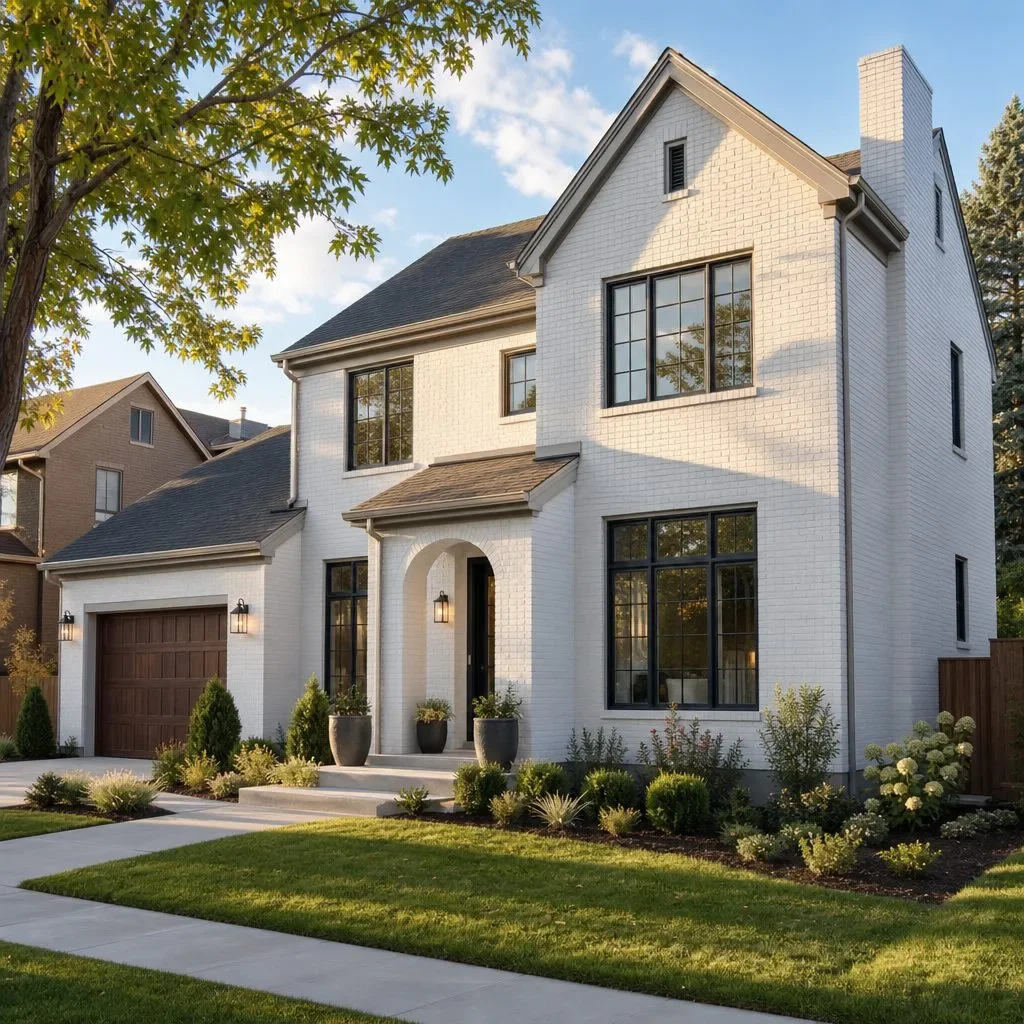
Painting brick is one of the most permanent decisions a homeowner can make. Unlike wood siding or fiber cement, brick is porous — once paint soaks into those pores, removing it means sandblasting, chemical strippers, or grinding. None of those options are cheap, and all of them risk damaging the brick itself.
That doesn't mean you shouldn't paint your brick. Done right, painted brick looks sharp, protects the surface, and can add serious curb appeal. But "done right" means understanding what you're committing to — and what mistakes will cost you down the road.
This guide is written specifically for Northern Colorado homeowners considering painting brick exterior surfaces. Fort Collins, Timnath, Windsor — our region puts painted brick through conditions most painting guides ignore.
Why Brick Is Different From Every Other Exterior Surface
Brick is designed to breathe. It naturally absorbs and releases moisture as temperatures shift. In Northern Colorado, that matters a lot — we average 28+ freeze-thaw cycles per year, and those cycles put significant stress on any coating that traps moisture inside the masonry.
The wrong paint or application method creates a moisture trap. Water gets in through mortar joints or microcracks, freezes, expands, and spalls the brick from the inside out. You end up with flaking paint AND damaged brick underneath.
This is the core risk with painting brick exterior surfaces, and most generic painting guides skip right past it.
Step 1: Check for Efflorescence First
Before any prep or primer, look for white chalky deposits on the surface of your brick. That's efflorescence — mineral salts being pushed out of the masonry by moisture movement inside the wall.
If you paint over efflorescence, you're sealing a moisture problem under a coat of paint. It will resurface, bubble the paint, and give you a failure within one or two seasons.
Treatment options include:
- Wire brushing and a diluted muriatic acid wash (follow all safety precautions)
- Commercial efflorescence removers
- In persistent cases, identifying and fixing the source of moisture intrusion first
Do not skip this step. It's the most common reason painted brick fails prematurely.
Step 2: Use a Masonry-Specific Primer
Standard exterior primer is not enough for brick. You need a masonry primer — specifically one that penetrates the pores and seals the surface without fully blocking vapor transmission.
Look for a high-build masonry primer that fills minor surface texture. This matters especially for older brick, which tends to have more texture variation and small surface irregularities.
In Northern Colorado, we also recommend a primer with mold and mildew inhibitors. Our humidity swings and snowmelt create conditions where untreated masonry can develop surface growth quickly.
Step 3: Breathable Paint Is Non-Negotiable
This is the single biggest mistake homeowners make when painting brick on their own: using standard exterior latex paint because it's what they've always used.
Brick needs a breathable, elastomeric, or masonry-rated paint — one that allows vapor to pass through while still blocking liquid water. Elastomeric coatings are especially good for Northern Colorado because they flex with temperature swings rather than cracking.
Standard exterior latex will trap moisture. In one to three winters, you'll see bubbling, peeling, and potential spalling. The repair cost will far exceed what you would have spent on the right product upfront.
For homes in Fort Collins and Timnath specifically — where UV exposure runs 10–15% higher than lower-elevation regions — UV-resistant formulations are worth the upgrade. Fading on painted brick is hard to touch up evenly.
Step 4: Application Technique Matters
Brick isn't flat. The mortar joints, texture, and surface variation mean you need a thick-nap roller (3/4" or 1") to get full coverage without dry spots. Brushwork is needed to push paint into mortar joints — don't rely on the roller alone.
Plan for two coats minimum. Most painted brick failures trace back to inadequate film build on the first application.
Do not paint brick in direct sun or when temperatures are above 85°F. The surface temperature of south-facing brick on a Colorado summer afternoon can exceed 100°F, which causes paint to dry before it bonds properly.
The Bottom Line: Get It Right the First Time
Painting brick is a long-term commitment. The prep work — efflorescence treatment, masonry primer, breathable topcoat — isn't optional. It's what separates a 10-year painted brick exterior from a 2-year paint failure.
If you're considering exterior painting on a brick home in Northern Colorado, our team can assess the surface, identify any moisture or efflorescence issues, and recommend the right system for your specific conditions. We back every project with $2M liability coverage and only use products engineered for Colorado's climate.
Get a free on-site quote — contact us here and we'll take a look before you commit to anything.