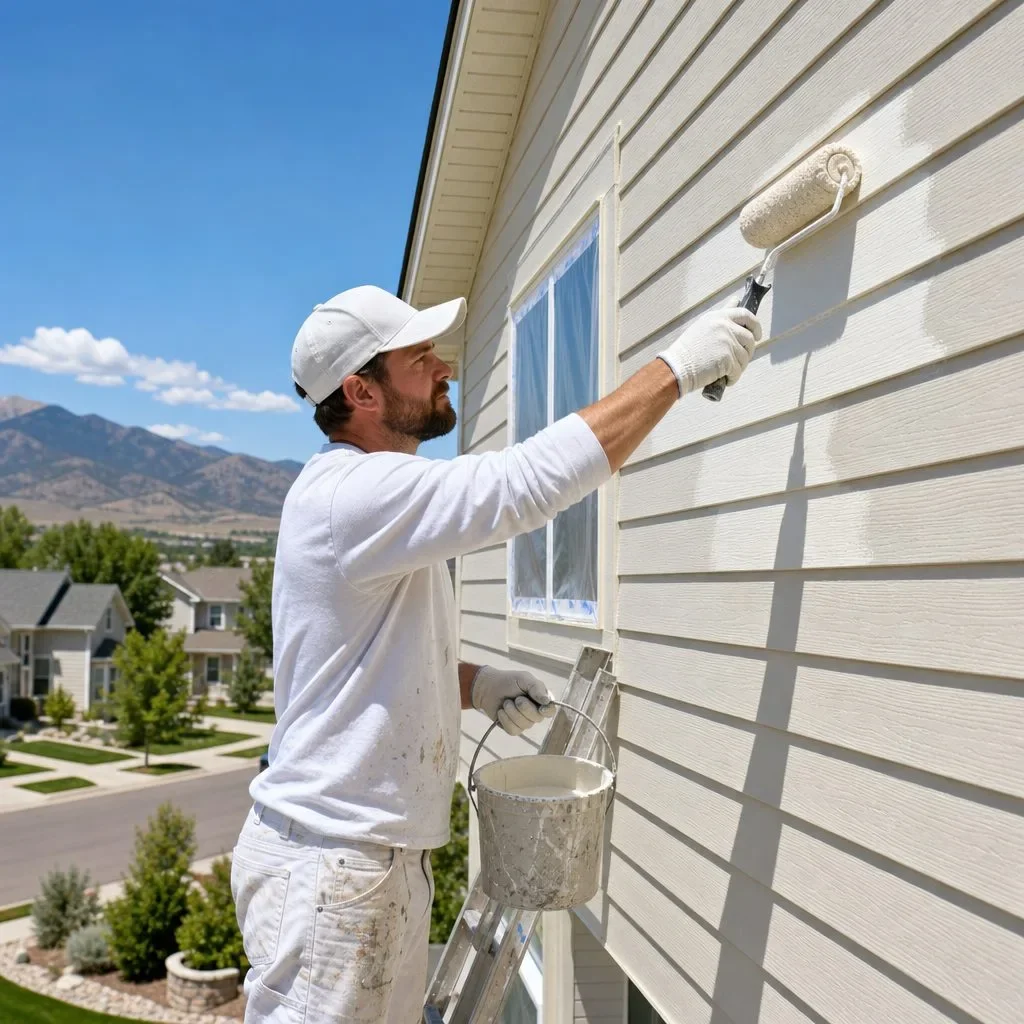
Vinyl siding is everywhere in Northern Colorado — Windsor, Timnath, Severance, Johnston. If you live in a subdivision built in the last 20–30 years, there's a good chance vinyl is what's standing between your home and the elements.
At some point, that siding fades. The color oxidizes, chalks out, and starts looking tired. The question homeowners ask us all the time: can I just paint it?
The short answer is yes — with the right conditions, the right products, and a clear-eyed understanding of the risks. Here's what actually works and what doesn't when it comes to painting vinyl siding in Fort Collins, CO and the surrounding area.
When Painting Vinyl Siding Makes Sense
Vinyl paint jobs work best when the siding is structurally sound — no warping, no cracks, no significant gaps at the seams. If the panels are still flat, well-fastened, and the only issue is fading or a color you're tired of, painting is a legitimate option that can extend the life of your exterior by years.
What doesn't work: painting over vinyl that's already buckling, brittle from UV exposure, or installed poorly. Paint won't fix underlying structural issues — it'll just highlight them.
The Heat Warping Risk in Northern Colorado
This is the piece most painting guides skip, and it matters more here than it does in other parts of the country.
Colorado sits at elevation. We get UV radiation 10–15% higher than lower-elevation regions, and our summers run hot — especially on south and west-facing walls. When you paint vinyl siding a significantly darker color than its original shade, you increase heat absorption. Vinyl expands and contracts with temperature. Push it too far, and panels warp.
The rule of thumb: stay within the same LRV (Light Reflectance Value) range as the original color, or go lighter. Going from beige to dark charcoal on vinyl is a gamble in this climate. We've seen it buckle.
This isn't a scare tactic — it's physics. Any contractor telling you they can paint your vinyl any color without risk isn't being straight with you.
Paint Selection: 100% Acrylic Only
Not all exterior paints are suitable for vinyl. The product you use needs to:
- Be 100% acrylic latex — this is non-negotiable. Acrylic flexes with the substrate as it expands and contracts. Oil-based or alkyd paints don't, and they'll crack.
- Be vinyl-safe, meaning it won't trap heat or off-gas solvents that attack the material.
- Include UV inhibitors — critical at Northern Colorado's altitude.
Top-tier options from Sherwin-Williams (VinylSafe® colors in Duration or Emerald) and Benjamin Moore (Aura Exterior) are formulated specifically for this application. These aren't budget-shelf products, but on vinyl, the paint choice is where the system either holds or fails.
Primer: Required or Optional?
Depends on the surface condition.
If the vinyl is faded but clean and dull, a bonding primer isn't always mandatory with high-adhesion topcoats. But if there's any chalking, oxidation, gloss remaining, or previous paint layers, you need a dedicated bonding primer before topcoat. Skipping it on a compromised surface is the fastest way to a peeling job within 2–3 years.
We clean, degrease, and assess every vinyl surface before making a primer call. It's not a universal answer — it's a condition-specific one.
Warranty Implications
Here's what most homeowners don't know: painting vinyl siding typically voids the manufacturer's warranty on the material itself. If a panel cracks or warps post-paint, the siding manufacturer isn't going to cover it.
That doesn't mean you shouldn't paint — it means you should go in informed. If your siding is already past warranty age (most are), this is a non-issue. If you have newer vinyl still under warranty, weigh that before moving forward.
What a Professional Job Actually Looks Like
For exterior painting on vinyl, a proper process looks like this:
- Full wash and surface prep — pressure washing, hand-scrubbing chalked areas
- Caulk inspection and sealing at trim, window surrounds, and transitions
- Bonding primer where indicated
- Two coats of 100% acrylic, vinyl-safe topcoat in an appropriate LRV range
- Cleanup and final inspection
Cut corners on any of these steps and the system underperforms. It's not about the color — it's about the prep and product stack underneath it.
Get It Right the First Time
If you're considering painting vinyl siding at your home in Fort Collins, Windsor, Timnath, or anywhere else in Northern Colorado, we'll give you a straight answer about whether it's the right move for your specific situation — and what it'll take to do it correctly.
Contact Keystone Painting for a free on-site quote. We'll assess your siding condition, walk you through color options that won't warp in Colorado's heat, and give you a system built to last 7–10 years.