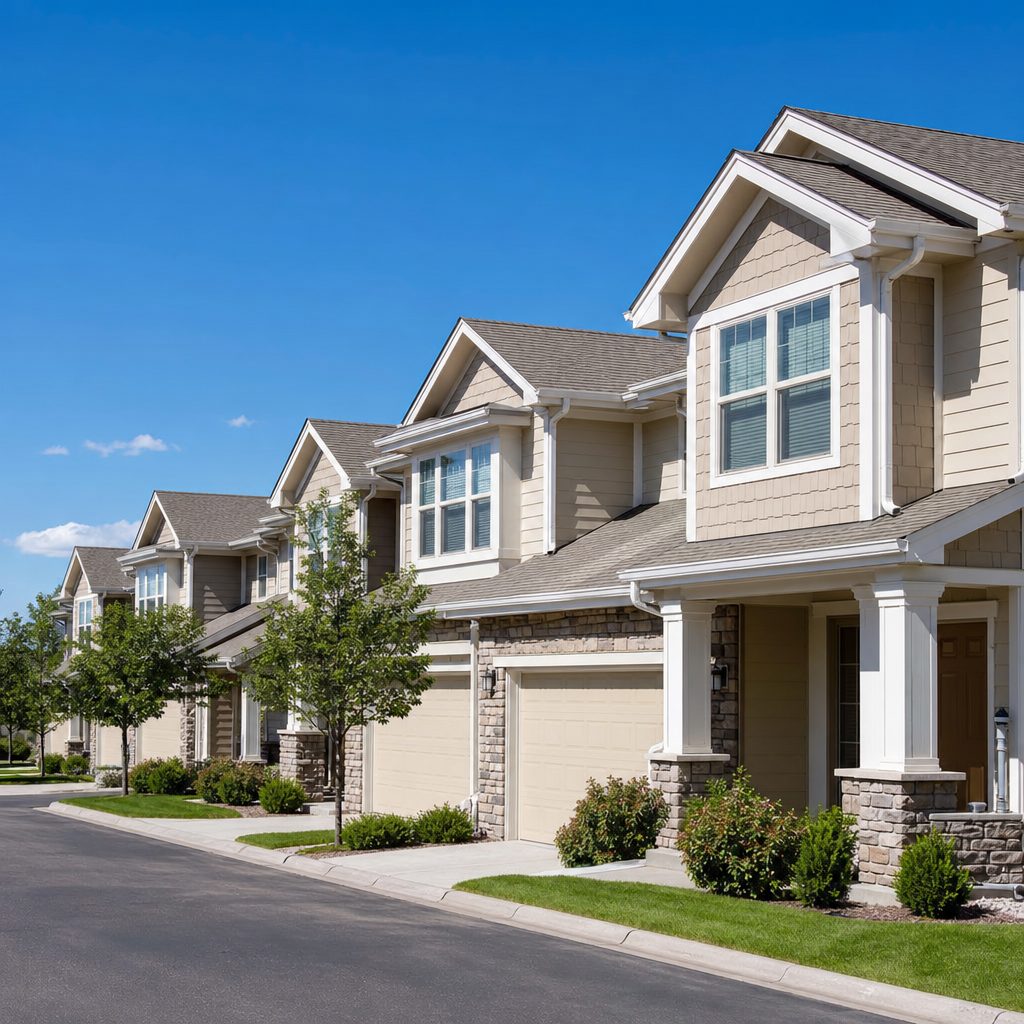
When an HOA kicks off an exterior painting project, the question that comes up fastest isn't about colors — it's about cost. What does it actually cost per unit? How does the board budget for it? And who ends up paying what?
If you're a board member, property manager, or homeowner in an HOA community in Timnath, Windsor, or anywhere in Northern Colorado, here's a straight breakdown of how HOA exterior painting costs work and what drives the numbers.
What Does HOA Exterior Painting Cost Per Unit?
In Northern Colorado, most HOA exterior painting projects run $1,200–$3,500 per unit for standard townhomes or attached single-family homes. That wide range comes down to a few factors:
- Unit square footage and stories — a single-story unit with 1,200 sq ft of paintable surface costs less than a two-story with double the exposure
- Condition of existing surfaces — heavy peeling, wood rot repairs, or extensive prep work adds cost before a single brush hits the wall
- Scope of surfaces covered — siding only vs. siding + trim + fascia + garage doors vs. full exterior including fences
- Number of units — larger communities benefit from economies of scale; a 10-unit community pays more per unit than a 100-unit community
- Color change — switching from a dark to a light base (or vice versa) can require an extra coat, adding 10–20% to labor
For detached single-family HOA communities — think custom homes in a master-planned neighborhood — the per-unit range shifts higher, often $3,500–$7,000+, since each home has more surface area and more complexity.
How HOA Boards Budget for Exterior Painting
Most well-run HOAs fund exterior painting through one of two methods:
1. Reserve Fund Contributions
This is the preferred approach. The HOA's reserve study projects when exterior painting will be needed (typically every 7–12 years for quality work) and calculates how much the community needs to set aside monthly per unit. When the project hits, the money is already there.
A healthy reserve means no special assessments and no scramble for bids under pressure.
2. Special Assessments
If reserves are underfunded — or if the community deferred painting too long and the project scope expanded — boards sometimes levy a special assessment. This is a one-time charge to homeowners to cover a capital expense.
Special assessments for exterior painting typically run $800–$2,500 per homeowner depending on project size, though communities with larger reserves or more units can keep this number down.
The takeaway: boards that maintain funded reserves and stick to a painting cycle avoid assessments. Boards that defer often pay more per unit and deal with the political headache of hitting owners with a surprise bill.
What Drives Cost Variance Between HOA Projects
Two HOA communities in Windsor with the same number of units can get bids that are thousands of dollars apart. Here's why:
Prep requirements. Colorado's 28+ annual freeze-thaw cycles create real surface stress — paint that was applied on a humid day or with inadequate primer tends to fail faster. A repaint after poor previous work means more scraping, more surface prep, and more hours before any paint goes on.
Paint system quality. Not all exterior paints perform the same at elevation. Northern Colorado sits at 5,000+ feet, with UV radiation running 10–15% higher than at sea level. Cheap paint systems fade, chalk, and crack in 3–5 years. Higher-end systems — properly applied — hold for 7–10 years. The difference in material cost is usually $300–$600 per unit. The difference in repainting frequency over 20 years is far larger.
Contractor licensing and coverage. An unlicensed crew with no insurance might bid 20–30% less. But HOA boards carry liability exposure when they hire uninsured contractors on common property. Look for contractors with $2M+ liability coverage and verifiable licensing — the cost difference is minor; the risk difference is not.
Fence and deck scope. Many HOAs manage common-area fencing and some include unit fences in the painting contract. Fence staining and exterior staining for wood structures adds to the project total but extends the life of those assets considerably.
Northern Colorado HOAs: What to Expect Locally
In communities around Timnath and Windsor, most HOA repaints are running on 8–12 year cycles when done with quality paint systems. Boards that stretch past 12 years typically find the prep costs escalate significantly — peeling siding, failed caulk, and oxidized surfaces require more labor to correct before painting can start.
The best time to schedule is late spring through early fall when temperatures stay above 50°F consistently, allowing paint to cure properly before winter freeze cycles begin.
Ready to Get a Number for Your Community?
If you're managing an HOA in Timnath, Windsor, or the surrounding Northern Colorado area, we offer free on-site quotes with per-unit cost breakdowns — the format boards actually need for reserve planning and member communication.
Learn more about our HOA painting services or reach out to schedule a walkthrough. We'll give you real numbers, not ballpark estimates.