
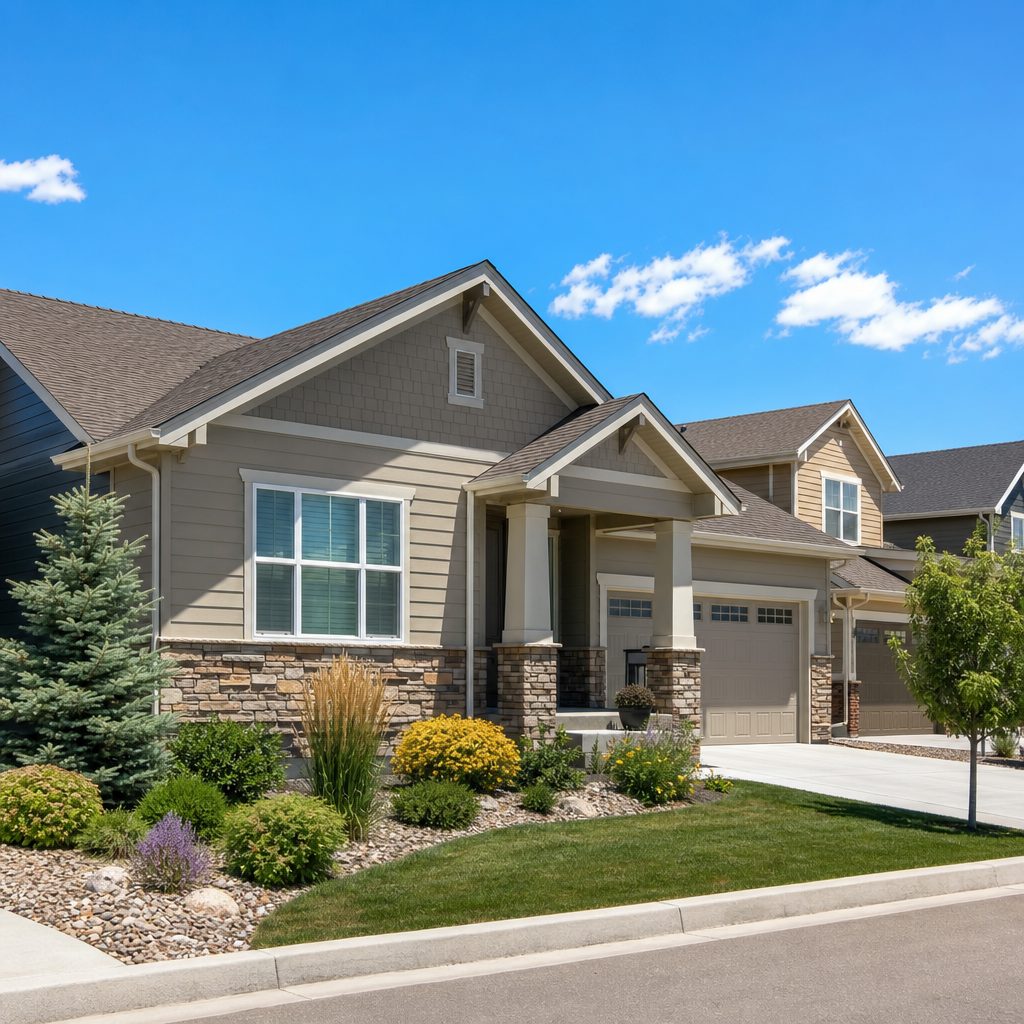
The Letter Nobody Wants in Their Mailbox
A denial letter from your HOA after you've already spent money on paint — or worse, a fine for unauthorized work — is one of the most frustrating homeowner experiences out there. The good news: most HOA painting violations are completely avoidable. The process just takes a little preparation upfront.
If you're in Timnath, Windsor, or anywhere else in Northern Colorado with an active HOA, this guide walks you through what typically gets rejected, the most common compliance mistakes, and how to submit your approval request the right way.
Why HOAs Regulate Exterior Paint in the First Place
HOAs exist to protect property values across the community. Exterior paint is one of the most visible elements of a home, so most associations tightly control color choices, finish types, and even the timing of work.
That's not inherently a bad thing — a well-maintained, visually cohesive neighborhood genuinely does protect your investment. But the approval process can feel like a maze if you don't know the rules.
What Typically Gets Rejected
Before you fall in love with a color, know what commonly triggers a denial:
Colors outside the approved palette. Most HOAs maintain an approved color list — sometimes just 10–20 options. Submitting anything outside that list is an automatic rejection regardless of how tasteful it looks.
Wrong sheen or finish. Some HOAs specify flat or low-sheen finishes for field colors and a different sheen for trim. Submitting a high-gloss color on the body of the house may not pass even if the color itself is approved.
Insufficient documentation. Missing a paint chip sample, brand/product name, or photo of the affected area is one of the most common reasons approvals stall or get denied outright.
Not separating field, trim, and accent colors. Most HOAs require you to specify each color zone separately — body, trim, doors, shutters, garage doors. Submitting one color for the whole house is usually incomplete.
Contractor not listed or uninsured. Some HOAs require proof that your contractor carries liability insurance before approving work. This is actually one area where working with a properly credentialed HOA painting contractor pays off — they're already set up to provide this documentation.
Common Violations After Work Is Completed
Even homeowners who get approval sometimes end up in violation after the job is done:
- Color drift from the approved sample — paint looks different in full sunlight than on a chip. Always verify the exact product name and formula code, not just the color name.
- Painting beyond approved scope — approval for the main body doesn't automatically cover the fence or deck. Those often require separate submissions.
- Work completed during a restricted season — some HOAs restrict exterior painting to certain months, especially in regions with harsh winters. Northern Colorado's freeze-thaw cycles make this a real consideration anyway — paint applied in the wrong conditions won't last regardless of HOA rules.
How to Submit Your HOA Approval Request Correctly
Every HOA is a little different, but this process covers the vast majority of them:
1. Pull Your CC&Rs and Architectural Guidelines
Before doing anything else, read your HOA's governing documents. Look specifically for the Architectural Review Committee (ARC) section. Know your deadline — most HOAs require 30–45 days for review.
2. Get the Approved Color List
Don't guess. Contact your HOA management company directly and ask for the current approved exterior color palette. Lists update periodically.
3. Select and Document Your Colors
Choose specific colors from the approved list for each zone: field (body), trim, accent/door. Write down the exact product name, manufacturer, and formula code for each. Physical paint chips submitted with your application help significantly.
4. Include Supporting Materials
Most ARC applications require:
- A photo of the current home exterior
- The specific colors proposed, with product names and chips
- Contractor name and proof of insurance
- Start date and estimated completion
5. Submit and Follow Up
Submit via whatever channel your HOA requires (email, online portal, or mail). Follow up at the 2-week mark if you haven't heard back. Don't schedule work until you have written approval in hand.
Timeline to Expect
Plan for 30–45 days from submission to approval in most cases. Some HOAs turn things around in two weeks; others take the full 45 days allowed under their bylaws. Build this into your project timeline — exterior painting in Northern Colorado has a seasonal window, and waiting until the last minute can push your project into weather you don't want.
Let Us Handle the Paperwork
We've worked with HOA communities throughout Timnath, Windsor, and the surrounding area. We know how to pull the documentation together correctly, submit it on your behalf, and coordinate the timeline so your project stays on track and in compliance.
If you're planning an exterior paint project and want a team that's done this before, reach out for a free on-site quote. We'll help you get it right the first time — no denial letters, no fines, no surprises.