
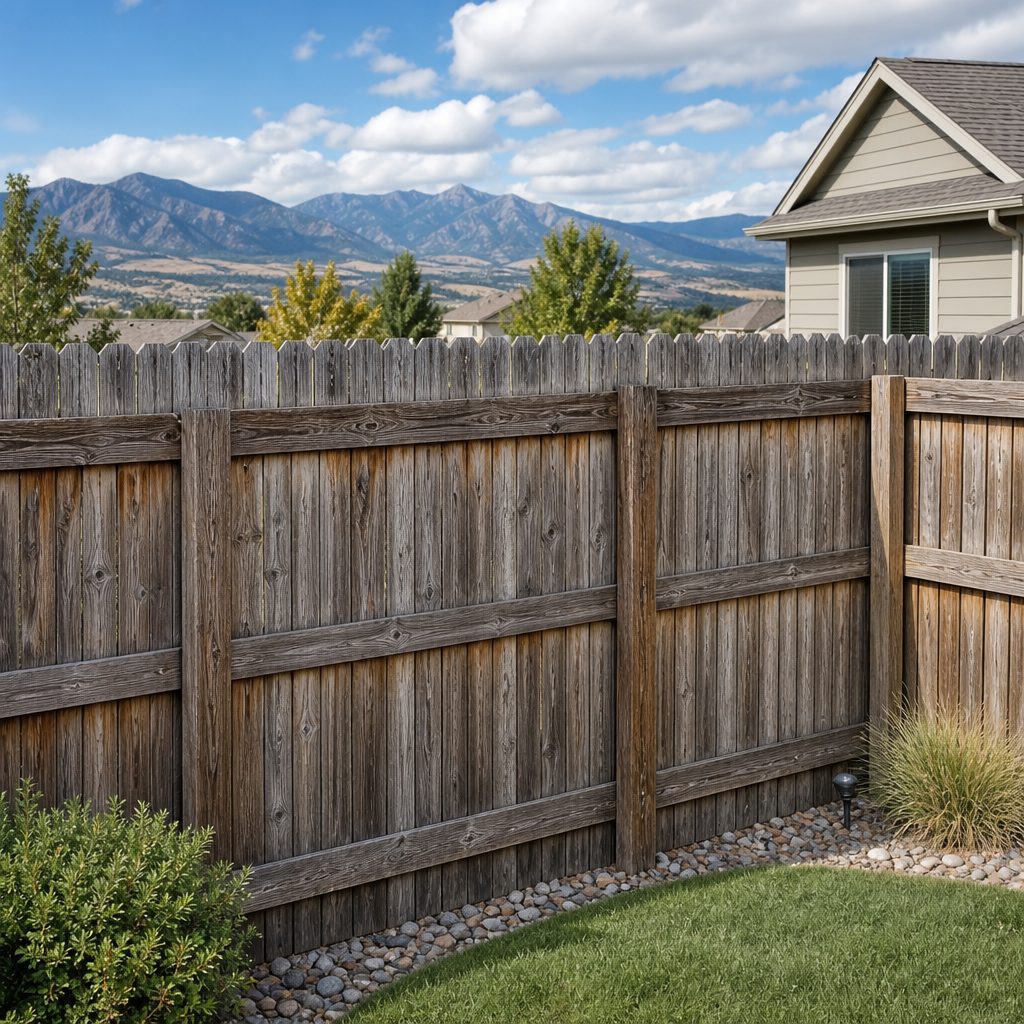
Your Fence Is Telling You Something — Are You Listening?
Most homeowners don't think about their fence stain until the wood is already cracking, splintering, or showing signs of rot. By that point, you're not looking at a stain job — you're looking at a replacement.
The good news: wood gives plenty of warning before it gets there. If you know what to look for, you can catch the signs fence stain is worn out early and protect your investment before the real damage starts. This matters especially in Fort Collins and surrounding Northern Colorado communities, where freeze-thaw cycles, altitude-driven UV exposure, and dry summers push stain to its limits faster than most homeowners expect.
Here's what to watch for.
1. The Water Bead Test
This is the fastest and most reliable diagnostic you can do in under 60 seconds.
Grab your garden hose and spray a section of your fence. Watch what happens:
- Water beads up and rolls off → stain is still doing its job
- Water soaks in and darkens the wood → the protective barrier is gone
When stain is performing, it sits on the surface and repels moisture. When it's worn out, the wood becomes thirsty. That absorbed moisture is what drives mold, rot, and eventually structural failure. If the water bead test fails, it's time to act.
2. Color Graying and Fading
Fresh stain has depth. It enhances the grain, holds a warm tone, and makes wood look protected. Worn stain looks flat, chalky, or gray.
The graying isn't just cosmetic — it's a sign the pigments that block UV radiation have broken down. Northern Colorado sits at an elevation where UV intensity runs 10–15% higher than sea-level regions. That accelerated UV exposure bleaches out stain faster than the national average, which means a fence that looks fine in May can be noticeably gray by September.
If your fence has lost its color and looks like raw or reclaimed wood, the UV protection is gone.
3. Surface Roughness and Raised Grain
Run your hand along a fence board. Protected wood feels relatively smooth. Weathered, unprotected wood feels rough — you can feel the grain rising and small fibers lifting off the surface.
That surface degradation is the wood itself breaking down at a cellular level. Stain doesn't just add color; it stabilizes the wood fibers and keeps the surface intact. Once the grain starts raising and the texture goes rough, the wood is more vulnerable to cracking with each moisture cycle.
4. Splintering and Checking
Splintering is a late-stage sign, but it's one most homeowners notice quickly — especially if kids or pets spend time near the fence.
Small surface checks (thin cracks running along the grain) are wood's response to repeated wetting and drying cycles. Each time the wood absorbs water and dries out, it expands and contracts slightly. Without stain to slow that cycle down, the stress accumulates and the wood splits.
Once checking starts, the interior of the wood is now exposed to moisture, which significantly speeds up rot potential. At this stage, re-staining alone may not be enough — surface prep becomes critical before any new product goes on.
5. Peeling or Flaking (If a Film-Forming Product Was Used)
If a previous contractor used a film-forming stain or paint rather than a penetrating stain, you may see peeling or flaking rather than gradual fading. Penetrating stains absorb into the wood and can't peel — film-forming products sit on top and eventually lose adhesion.
Peeling is harder to work with because it requires thorough stripping before re-application. It's one of the reasons penetrating stains are generally preferred for fences in climates with significant moisture and temperature swings.
How Often Should You Restain in Northern Colorado?
In most parts of the country, fence stain lasts 3–5 years. In Fort Collins, Windsor, and surrounding communities, a realistic window is closer to 2–4 years depending on sun exposure, wood species, and the quality of the original application.
South and west-facing fence sections take the hardest UV hit and typically show wear first. If one section of your fence looks fine and another looks gray, check orientation — it's usually the sun doing the work.
Don't Wait for Rot to Make the Call
The cost difference between a restain and a fence replacement is significant. Catching worn stain early — through the water bead test, a color check, or a quick visual inspection — is the kind of preventive maintenance that actually pays off.
If you're in the Fort Collins area and not sure what you're looking at, we're happy to take a look. Our team specializes in fence staining and exterior wood protection built for Colorado's specific climate demands. We offer free on-site quotes and can assess your fence's condition before recommending next steps.
Contact us to schedule your free estimate — or check out our exterior staining work to see what properly maintained wood looks like.