The Question Every Wood-Heavy Homeowner Asks
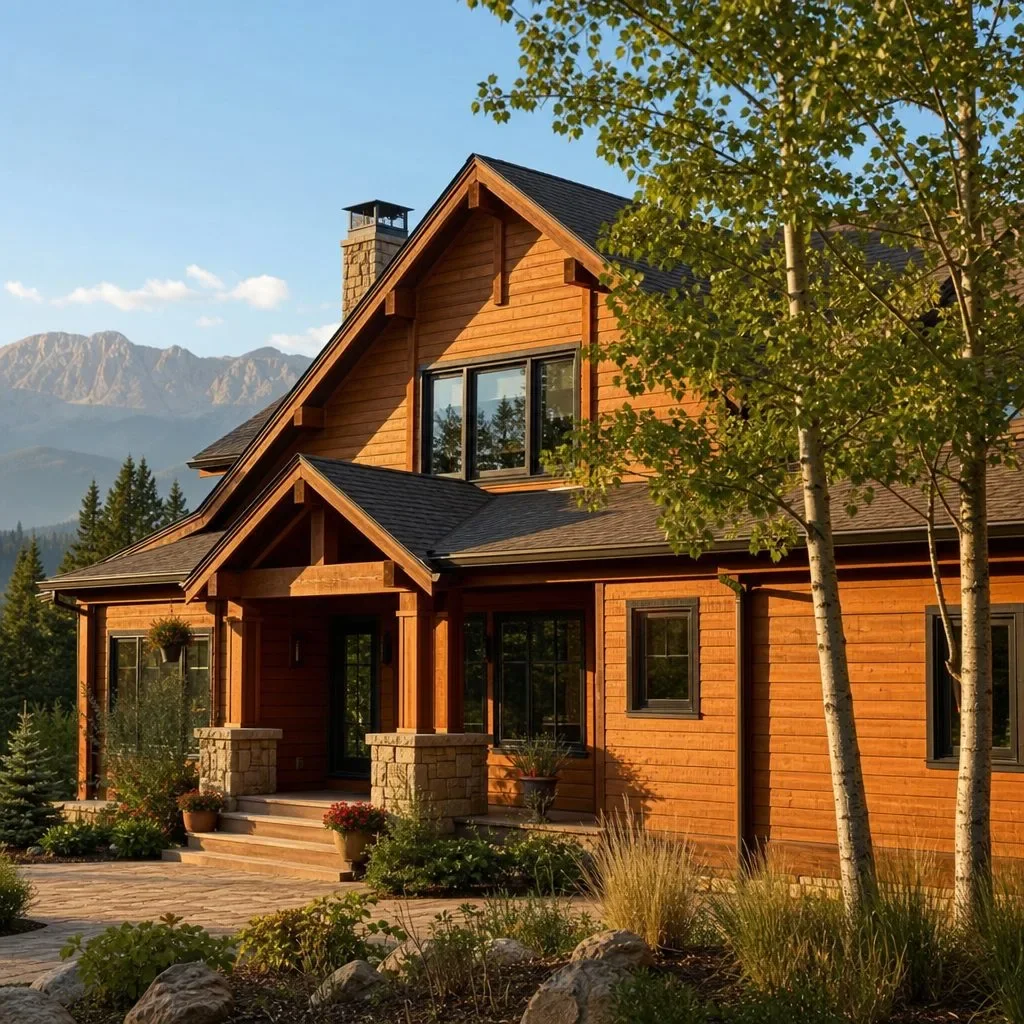
You've got cedar siding, a wood fence, or a deck that needs attention — and you're staring down the same decision thousands of Northern Colorado homeowners face every few years: do you stain it or paint it?
Both options protect wood. Both change how your home looks. But over a 10-year window, they perform very differently — especially in a climate like Fort Collins, CO, where altitude-driven UV exposure runs 10–15% higher than sea-level regions and freeze-thaw cycles hammer exterior surfaces 28+ times a year.
Here's the honest breakdown.
How Stain and Paint Actually Protect Wood
Paint forms a surface film on top of the wood. It looks clean and opaque, hides imperfections, and works well on smooth substrates. The problem: that film eventually peels, cracks, and traps moisture underneath — accelerating rot and requiring full removal before recoating.
Stain penetrates the wood fiber. It doesn't sit on top; it bonds from within, allowing moisture vapor to escape rather than get trapped. For natural wood species like cedar and redwood, this is a fundamentally better fit.
In Colorado's climate, where wood expands and contracts aggressively through freeze-thaw cycles, a surface film is always fighting a losing battle. Stain moves with the wood. Paint eventually doesn't.
The 10-Year Cost and Maintenance Comparison
This is where the data gets interesting. Let's run through a realistic 10-year scenario for a cedar-sided home in the Fort Collins area:
Paint:
- Year 1: Full prep + prime + two coats = higher upfront cost
- Year 4–5: Touch-up peeling sections
- Year 7–8: Major recoat required; possible scraping/stripping
- Year 10: Often at or near full repaint again
- Cycle: ~3–5 years between major interventions
Semi-Transparent Stain:
- Year 1: Prep + two coats = moderate upfront cost
- Year 4–5: Light maintenance coat (faster, cheaper — no stripping needed)
- Year 8–9: Full recoat on a clean surface
- Year 10: Still protecting. No film buildup. No peeling.
- Cycle: ~4–6 years with easier recoats
Over a decade, stain typically costs less in both labor and materials because recoating stain is dramatically easier than repainting. There's no scraping down to bare wood. No primer. No fighting lifted edges. You clean the surface and apply.
When Painting Is Still the Right Call
Stain isn't always the answer. Here's when paint wins:
- Fiber cement or composite siding — these aren't natural wood and don't absorb stain the same way. Paint adheres better.
- Heavily patched or repaired surfaces — paint hides inconsistencies that stain will highlight.
- HOA requirements or color-match needs — if you're locked into a specific look, paint gives more control over opacity and exact color.
- Previously painted surfaces — once wood has multiple layers of paint, stain isn't a practical switch without full stripping.
For our HOA painting projects in planned communities around Windsor and Timnath, paint is often the spec'd standard. We work within those requirements while still building durability into the system.
Stain Categories: Not All Stains Are Equal
If you go the stain route, product selection matters.
- Transparent stains — maximum grain visibility, minimum UV protection. Best for newer, high-quality wood that you want to show off.
- Semi-transparent stains — the sweet spot. Good grain visibility + meaningful UV and moisture protection. Recommended for most cedar and wood-heavy exteriors in Northern Colorado.
- Solid stains — behave more like paint. Hides grain, longer-lasting color, but loses the penetrating benefit over time as it builds up.
For most of the exterior staining work we do in Fort Collins, Timnath, and Windsor, semi-transparent is the default recommendation — especially for cedar siding that hasn't been previously painted.
What Northern Colorado's Climate Demands
Fort Collins sits at roughly 5,000 feet. That elevation matters:
- UV radiation at altitude degrades exterior coatings faster than it does at sea level.
- Temperature swings of 40–50°F in a single day aren't unusual in spring and fall.
- Moisture from snowpack and spring runoff puts consistent pressure on any coating that isn't letting wood breathe.
Paint films crack under that kind of stress. Quality penetrating stains are engineered to handle it — which is why we spec products specifically chosen for Colorado's conditions, not generic national-brand defaults.
The Bottom Line
For cedar siding, wood fences, and natural wood-heavy exteriors in Fort Collins and surrounding areas: staining usually wins on protection, maintenance ease, and 10-year cost. It works with the wood instead of on top of it — and in this climate, that distinction matters.
Paint has its place. But if you're starting fresh with natural wood, staining is the smarter long-term play.
Ready to figure out which is right for your home? We offer free on-site quotes across Fort Collins, Timnath, Windsor, and the greater Northern Colorado area. We'll look at your siding, your history, and give you a straight recommendation — no upsell, no fluff.