What Is Exterior Staining — and Is It Right for Your Home?
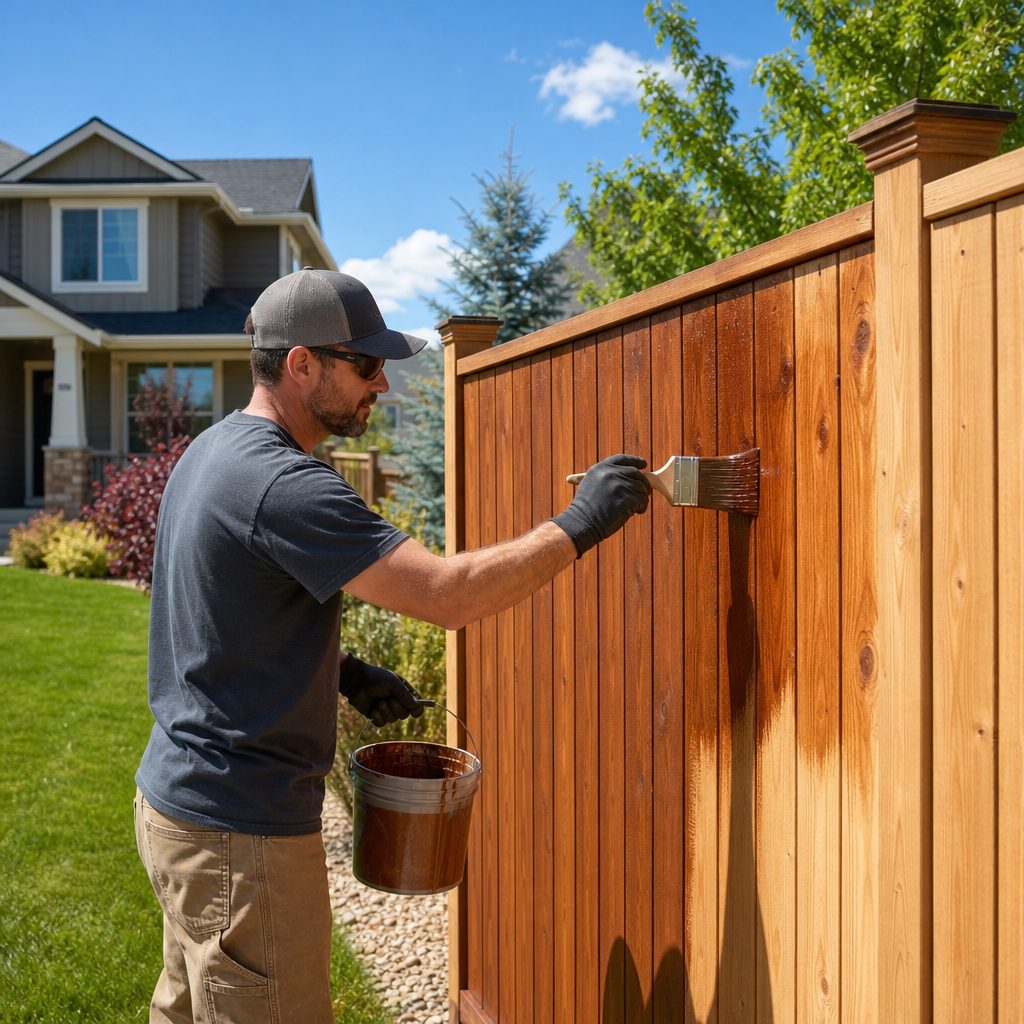
Exterior staining is one of the most effective ways to protect and beautify wood surfaces on your property. Unlike paint, which sits on top of the wood as a film, stain penetrates the wood fibers and protects from the inside out. That difference matters — especially in Northern Colorado, where UV exposure runs 10–15% higher than lower-elevation regions and freeze-thaw cycles punish surfaces that aren't properly protected.
If you've got a fence, deck, wood siding, or pergola that's looking weathered or gray, exterior staining is almost certainly worth considering. This guide breaks down everything you need to know before you start.
Types of Exterior Stain
Not all stains are the same. Choosing the right one depends on what you're trying to protect and how much of the wood's natural look you want to preserve.
Transparent Stain
Provides the least color but allows maximum wood grain visibility. Best for new or recently refinished wood in good condition. Offers lighter UV protection — not ideal as a standalone product in Colorado's high-altitude sun.
Semi-Transparent Stain
The sweet spot for most homeowners. Adds some color while still showing grain and texture. Provides solid UV and moisture resistance without fully hiding the wood's character. This is the most common choice for fences and decks in the Fort Collins area.
Semi-Solid Stain
More pigment, less grain visibility. Good for older wood with minor imperfections you want to tone down. Still penetrates and protects better than paint on horizontal surfaces.
Solid Stain
Covers like paint but still penetrates like a stain. Best for heavily weathered or damaged wood where appearance needs a full reset. Requires the most maintenance going forward, as it can peel if moisture is trapped underneath.
What Surfaces Can Be Stained?
Exterior staining works best on porous, natural wood surfaces, including:
- Wood fences — cedar and pine fences are ideal candidates
- Decks and patios — horizontal surfaces take the most abuse from moisture and UV
- Wood siding — lap siding and board-and-batten benefit from penetrating stain systems
- Pergolas, arbors, and trellises — often overlooked but just as vulnerable to weather damage
- Exterior trim and fascia — can be stained to match or complement the main surface
Composite, vinyl, and metal surfaces cannot be stained effectively — those require specific coatings or paint products instead.
Prep Is Non-Negotiable
This is where most DIY staining jobs go wrong. Stain applied to dirty, wet, or previously coated wood will fail fast — usually within a season.
Proper prep for exterior staining includes:
- Cleaning — Power washing or hand-washing to remove dirt, mildew, and old surface treatments
- Brightening — A wood brightener restores pH balance and opens the grain for better penetration (especially important for weathered gray wood)
- Drying time — Wood must be fully dry before stain goes on. In Colorado's dry climate, this is usually 24–48 hours after washing, but varies by humidity and season
- Sanding or stripping — Required if there's an old solid stain or paint that needs to come off
Skipping or rushing prep is the #1 reason stain jobs fail before their time.
Exterior Staining vs. Painting: What's the Difference?
Both protect wood, but they do it differently — and the right choice depends on your surface and goals.
| Stain | Paint | |
|---|---|---|
| Penetration | Into the wood | Surface film |
| Failure mode | Fades, wears | Peels, chips |
| Reapplication | Easier (no stripping) | Can require full strip |
| Best for | Fences, decks, natural wood | Siding, trim, smooth surfaces |
| Maintenance cycle | 2–5 years depending on product | 5–10 years |
For exterior painting projects like siding and trim, paint typically wins. For fence staining and decks, a quality penetrating stain almost always outperforms paint in the long run.
Colorado-Specific Considerations
Fort Collins and Northern Colorado are not forgiving environments for wood. Here's what makes our climate different:
- UV Intensity — At 5,000+ feet of elevation, UV radiation is significantly stronger than at sea level. This accelerates fading and surface breakdown. Products with UV inhibitors are essential, not optional.
- Freeze-Thaw Cycles — Northern Colorado averages 28+ freeze-thaw cycles per year. Any moisture that gets into unprotected wood will expand and contract, cracking and splitting the surface over time.
- Low Humidity + Wind — Colorado's dry air actually helps stain dry fast, but it also means wood dries out and becomes brittle without proper protection. Film-forming products (like solid paint) can trap moisture on the few wet/humid days we do get.
A semi-transparent or semi-solid penetrating stain, applied correctly, handles all three of these challenges better than most film-forming products. For exterior staining in Fort Collins, CO and surrounding areas, product selection matters as much as application.
How Much Does Exterior Staining Cost?
Cost varies based on surface area, surface condition, and product. Rough ranges for Northern Colorado:
- Fence staining: $2–$5 per linear foot (both sides)
- Deck staining: $1.50–$4 per square foot
- Wood siding: Priced similarly to exterior painting, typically $2–$6 per square foot
Heavily weathered surfaces requiring stripping, sanding, or brightening will run toward the higher end. Proper prep adds cost upfront but dramatically extends the life of the finish — so it's always worth it.
Ready for a Quote?
If you're in Fort Collins, Windsor, Timnath, or anywhere in Northern Colorado, we'd be glad to walk your property and give you a straight answer on what your wood needs — and what it'll cost. We offer free on-site quotes with no pressure.
Contact us here or explore our areas served to see if we cover your neighborhood.